

Time:2025-07-07 Views:0
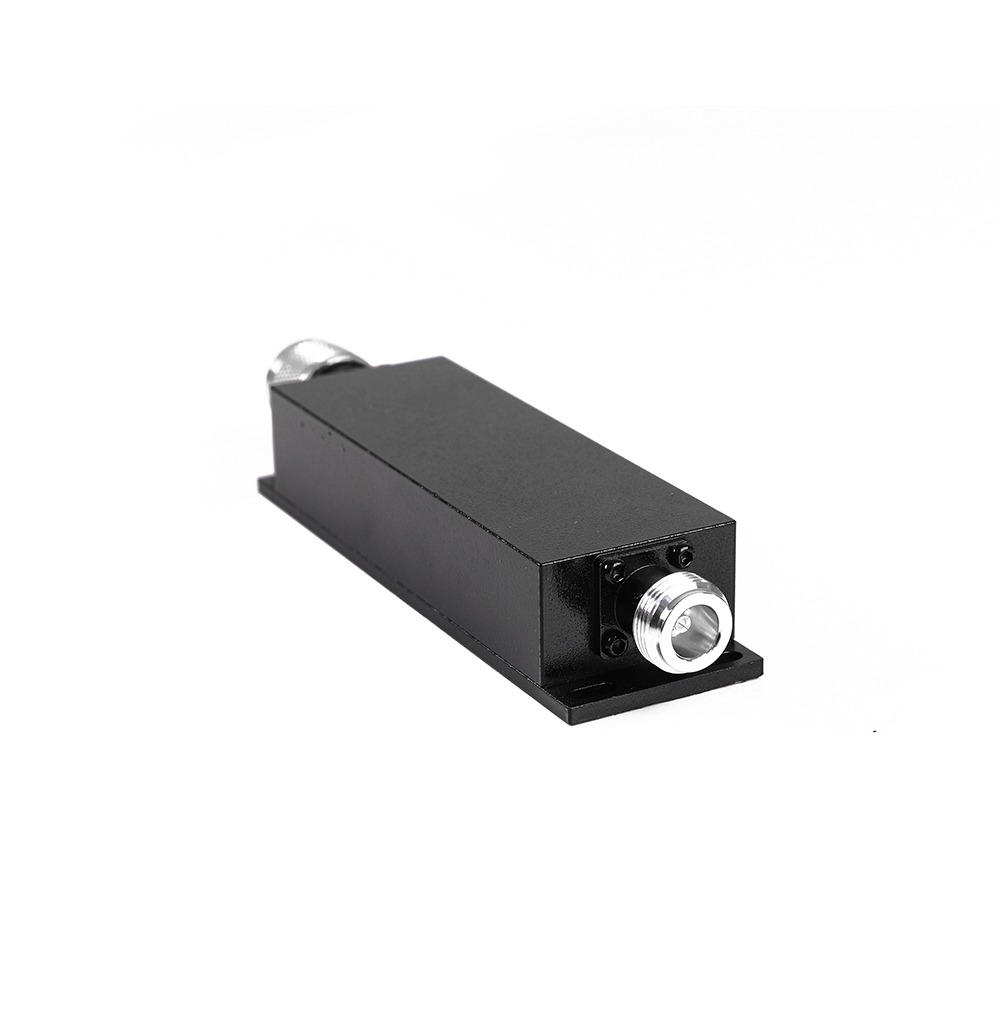
Radio Frequency (RF) filters are essential components in wireless communication systems, designed to selectively pass or block signals within specific frequency ranges. Their classification is based on frequency response, structure, and application, with each type serving unique purposes in RF and microwave engineering.
Frequency Response-Based Types
Low-Pass Filters (LPF):Allow signals below a cutoff frequency to pass through while attenuating higher frequencies. Common in power supply filtering and baseband signal processing, they mitigate high-frequency noise in analog circuits. For example, in audio systems, LPFs remove ultrasonic noise beyond human hearing. Structurally, they often use inductors and capacitors (LC networks) or distributed elements like microstrip lines at higher frequencies.
High-Pass Filters (HPF):Opposite of LPFs, they block low frequencies and pass signals above a cutoff point. HPFs are critical in wireless receivers to eliminate DC offsets and low-frequency interference. In radar systems, they isolate high-frequency echoes from low-frequency clutter. Design-wise, they use capacitive coupling and inductive shunts, with component values calculated to achieve the desired roll-off rate.
Band-Pass Filters (BPF):Permit a specific frequency band to pass while suppressing signals outside this range. Widely used in transmitters and receivers to isolate the desired channel from adjacent frequencies. For instance, in cellular base stations, BPFs ensure only the assigned frequency band is transmitted, reducing interference with neighboring cells. Common structures include cavity resonators, surface acoustic wave (SAW) filters, and dielectric resonators, offering high selectivity and low loss.
Bandstop (Notch) Filters:Block a specific frequency band while allowing signals outside this range to pass. They are vital in rejecting unwanted interference, such as in GPS receivers to suppress signals from nearby transmitters operating in the same band. Bandstop filters can be implemented using parallel LC traps or coupled resonators, with applications ranging from medical devices to aerospace systems.
Structure-Based Types
LC Filters:Composed of discrete inductors and capacitors, suitable for low to medium frequencies (up to ~1 GHz). They are cost-effective but suffer from size and loss limitations at higher RF/microwave bands.
Distributed Element Filters:Use transmission lines (e.g., microstrip, stripline) to form resonators and couplings, enabling compact designs at microwave frequencies (1–100 GHz). Examples include hairpin filters and interdigital filters, which leverage the electromagnetic properties of planar structures.
Cavity Filters:Constructed from metal enclosures (cavities) that act as high-Q resonators, offering excellent selectivity and power handling. Widely used in military and satellite communications, they can operate from UHF to millimeter-wave bands.
Surface Acoustic Wave (SAW)/Bulk Acoustic Wave (BAW) Filters:Utilize mechanical wave propagation in piezoelectric materials (e.g., quartz, lithium niobate) to achieve sharp frequency responses. SAW filters are dominant in mobile phones for their compact size and high selectivity in the 0.5–2.5 GHz range.

2nd floor, Building A, Juchuang Jingu Creative Park, Nanshan District, Shenzhen
Phone : 0755-26701085 / 0755-26701002
Email : sales@nxbtech.com / tangym@nxbtech.com


0755-26701085 / 0755-26701002

sales@nxbtech.com / tangym@nxbtech.com